
Traditional full dentures are a common method of full teeth replacements but are often known for falling out when speaking and eating. Lower dentures mostly, but some upper dentures tend to move on the gum making eating especially difficult. Partial dentures which clip onto unhealthy teeth with gum disease or large fillings tend to deteriorate slowly over time. Without teeth or implants in the bone to keep its volume, the jaw naturally shrinks. Over a longer period of time it has effects of the profile of the face creating a more wrinkled and sunken in look. Dentures that are ill-fitting deteriorate the jaw bone faster than having no dentures or a good denture.
A lot of our patients who pick implants options to restore their speech and smile want something as close to their natural teeth, or with better appearance. Most others tend to focus on eating what they like and want to “order what they want off the menu” as opposed to what they are limited to.
Implants are titanium fixtures that are shaped like roots of teeth. They are effective long term options for replacing missing teeth and attaining a new quality of life. In addition to single tooth replacement, dental implants can be configured to replace missing teeth in an upper or lower jaw or both. Other than having no teeth and a traditional full denture here are 2 common options. Our dentists will guide you as to which one is most appropriate for your budget, lifestyle and biology. Our consultation will include an examination of the mouth, photos, xrays and scans to assist you making the best decision.

Implant Denture
(a.k.a ‘Clip on denture’ or Implant retained removable denture)
2-4 implants will be used to firmly hold a removable denture during daytime, the dentures will need to be taken out of the mouth at night time.

Example of an Implant Denture
These look like traditional full dentures from the front, but they have additional componentry underneath which allow is to “clip” into the implants fixed into the bone. The implants stabilise the dentures while talking or chewing compared to traditional dentures, which sometimes can fall out. Denture adhesives are not be required to hold implant dentures into its place.
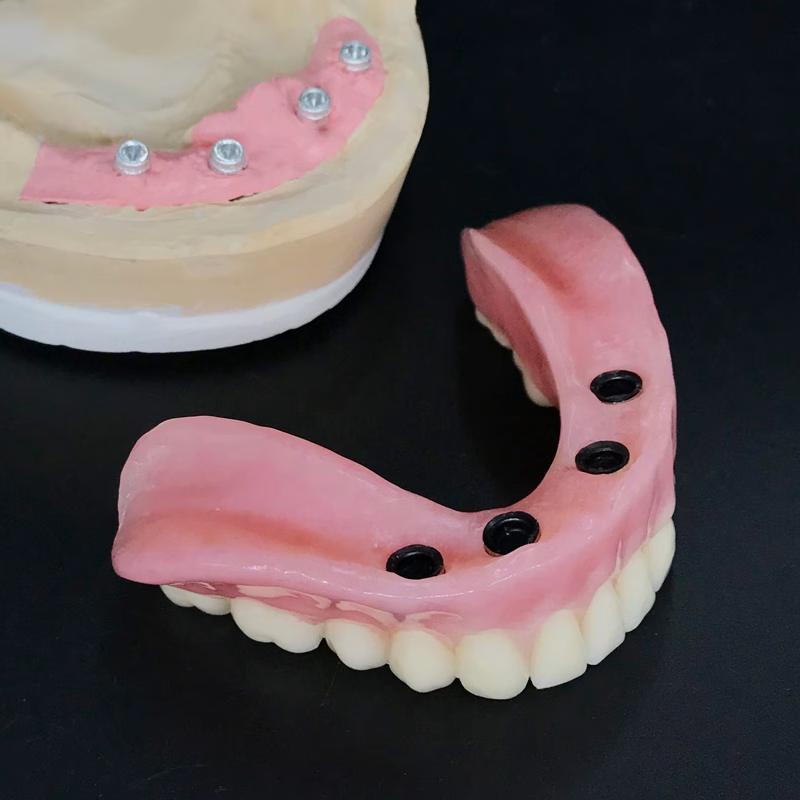
Removable Full Arch

Implant Denture
Implant Bridge
(a.k.a ‘All on X’ or full arch fixed bridge)
A number of implants (usually 4-6) are placed into the jaw, then a fixed bridge will be fitted onto the implants on the same day or after 3 months of healing. Implant bridges stay in the mouth 24/7 and cannot be removed by the patient. Unlike a denture the implant bridges do not cover the roof of the mouth. Our dentists will decide which is the best material for your implant bridge to be made out of. Options can include Titanium reinforced acrylic, milled PMMA and Zirconia.
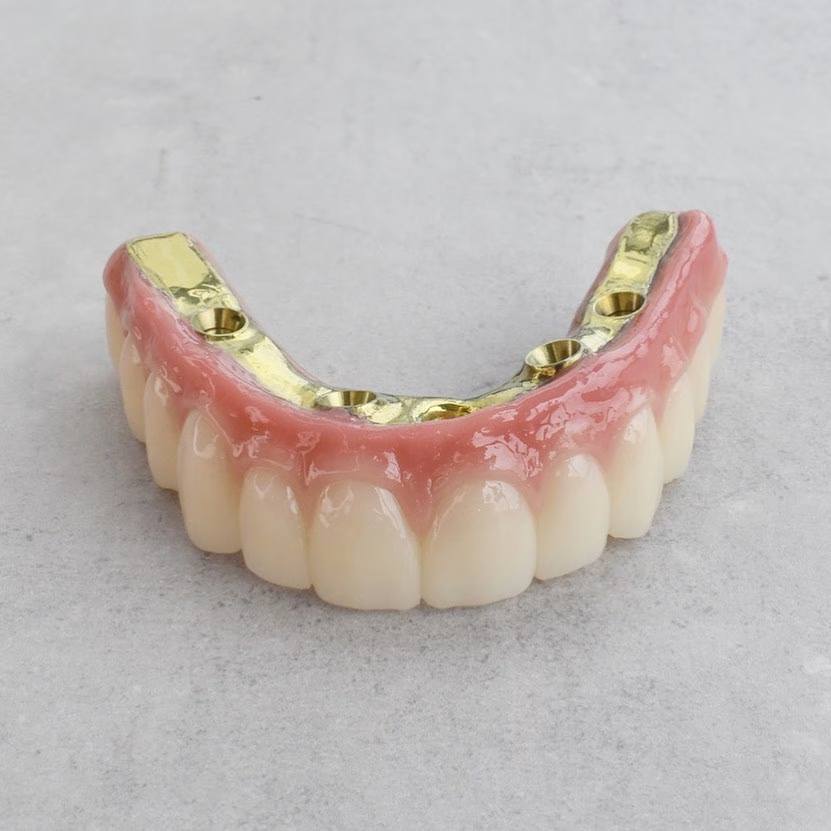
Example of implant bridge (titanium reinforced acrylic)
Titanium reinforced acrylic bridges are lower in cost and suitable in cases with very low bite forces for example when the opposite jaw has a denture with few or no natural teeth.

Example of an implant bridge with fine aesthetics to mimic natural teeth (zirconia bridge for strong bites)
Zirconia bridges are higher in cost and are suitable for cases where the opposite jaw has natural dentition.

Example of implant bridge

Example of implant bridge
Treatment process for
Implant denture

Dr Akash Kota
Principal Dentist
ak@smilemakeover.co.nz

Dr Kenny Kim
Principal Dentist
kk@smilemakeover.co.nz
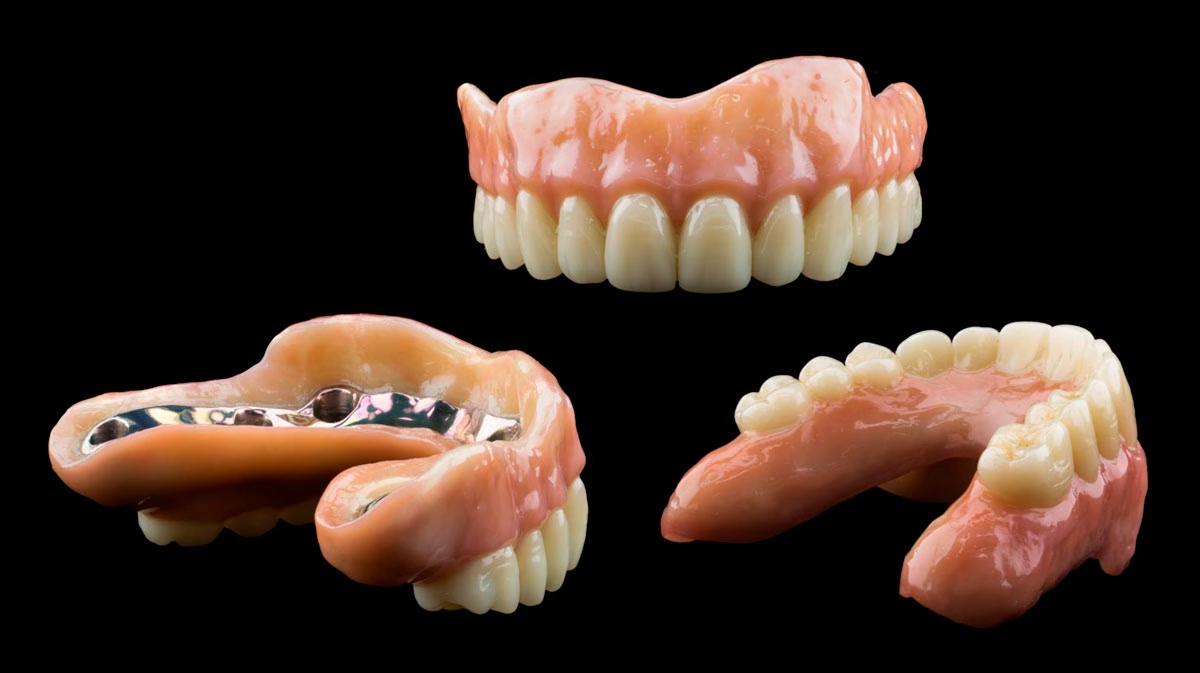
Implant denture
What are the benefits?
Treatment Process

Get a diagnostic scan
STEP 1
Your dentist will take thousands of images of your teeth in just minutes along with an impression for a precise digital planning

Customised 3D design
STEP 2
Your 3D treatment plan will be designed and reviewed by a digital treatment planner with your dentist. Then your 3D template will be printed and send directly to your dentist

Minimally invasive implant surgery
STEP 3
Your dentist will perform an atraumatic keyhole implant surgery by using the 3D template. two or more dental implants will be placed that will attach to your new teeth.
In many cases, we can do this on the same day of surgery as the technology allows us to digitally design and produce your teeth in advance of surgery.

Brand-new smiles
STEP 4
After you complete the process of restoration, you will have a beautiful and permanent tooth replacement
How can technological advances benefit my implant placement?
We have digital oral scanners and 3D Cone-Beam CT machine which allows us to provide world class precision for implant placement. Guided surgery provides the dentist with a custom, pre-planned digital 3D surgical template which guides the dentist during implant placement surgery to the desired drilling angle and depth.
Having everything digitally-planned ahead of surgery makes it possible to produce a provisional restoration which provides you with accurate, safe, and convenient dental care. Often due to the keyhole surgery approach the appointment time is much shorter and often will not require stitches.
Aftercare
Any Implant bridge will need 6 or 12 monthly dental visits to ensure bone and gum health is stable. Most cases will require nightguard to be worn every night to protect the bridge and the opposing teeth.
Physical gum cleaning will be required 2 times per day (with floss, picksters, waterflosser etc.). It is not uncommon for acrylic to chip and require some maintenance over the years. The strongest bridge option (zirconia) has a lifetime for 10+ years. All others about 5-10 years.


