
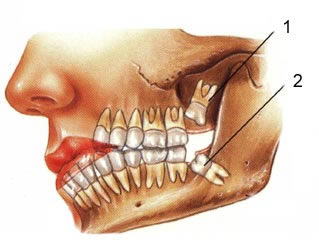
Wisdom teeth are the four rearmost molars, usually appearing between the ages of 17 and 25. When there is enough space they come through without issue. The problem arises when there is not — the tooth grows at an angle, becomes wedged against the molar in front, and causes pain, infection, and damage to the surrounding teeth. This is called an impacted wisdom tooth.
Many people manage for years with intermittent flare-ups. But leaving impacted wisdom teeth in place carries a real risk: they are extremely difficult to clean, leading to decay — not just in the wisdom tooth itself, but in the healthy molar next to it. That is the outcome we most want to help you avoid.

If you have wisdom tooth pain right now
The following steps will help manage a flare-up while you arrange an appointment:
- Brush and floss thoroughly around the affected tooth — keeping the area clean reduces bacterial load and helps the gum settle.
- Take anti-inflammatory pain relief such as ibuprofen (follow packet instructions), with paracetamol if needed. Both together are more effective than either alone.
- Rinse with a warm salt water mouthwash four times a day — dissolve a teaspoon of salt in a glass of warm water and rinse for 30 seconds. Do this for at least four days.
- If you have been prescribed antibiotics, take the full course as directed even if symptoms improve.
Having your wisdom teeth removed
An x-ray allows us to see the position and angle of the roots and assess how straightforward the removal will be. We will talk you through exactly what to expect, including the associated risks, before any treatment is planned.
As general dentists with oral surgery experience, we handle wisdom tooth extractions in-house for the majority of patients. Most people find the procedure much more comfortable under IV sedation, which we offer on-site — particularly for lower wisdom teeth or anyone feeling anxious about the process.
While we will always treat the tooth causing the problem, we sometimes recommend removing all impacted wisdom teeth at the same time. Doing so in a single procedure is more convenient and reduces the overall cost compared to returning for separate appointments later.
One thing worth knowing: earlier is generally easier. In younger patients the surrounding bone is less dense, healing is faster, and the extraction tends to be more straightforward. Delaying removal — especially once a tooth has started causing repeated problems — often means a more complex procedure later, and increases the risk of damage to the adjacent tooth.
Getting seen
If you are in pain or concerned about a wisdom tooth, call us. We will prioritise you for a same-day consultation where possible, and if there is any facial swelling involved, we will get you in the same day. Even if we cannot remove the tooth immediately, we can assess the situation, provide relief, and make a clear plan.
If you need a medical certificate or letter for your employer, school, or university following treatment, we are happy to provide one — just let us know.